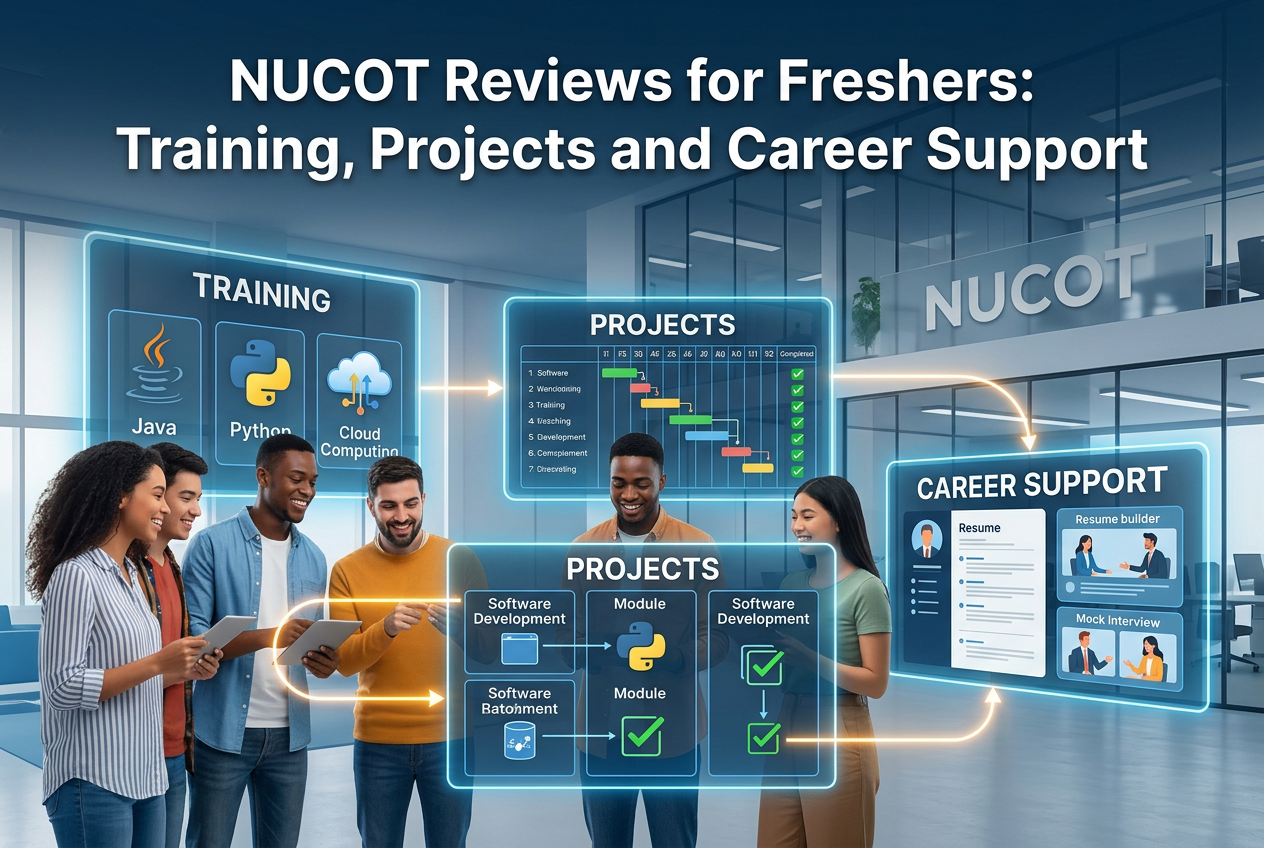
Fresh graduates often face a challenging transition from academic study to professional work. They may understand theoretical concepts but have limited experience applying them to practical problems, building a portfolio or answering technical interview questions.
For this reason, freshers researching NUCOT reviews for freshers should look beyond general opinions and assess whether a training program matches their current skills, learning goals and career expectations. Understanding the curriculum, project work and career support can help students make a more informed choice.
What Should Freshers Look for in a Training Program?
The right program depends on a student’s background and intended career path. Someone interested in data analytics may need a different learning plan from someone pursuing software development or testing.
For a beginner exploring data science, useful foundational topics include Python, SQL, statistics, data cleaning, visualisation and introductory machine learning. Students should check whether the course explains these topics progressively and provides sufficient time to practise.
A syllabus containing many advanced terms is not necessarily better than one that teaches the fundamentals thoroughly.
1. Check Whether the Curriculum Suits Beginners
Freshers should understand the assumed entry-level knowledge before enrolling. If a course expects prior programming experience, students without that background may need additional preparation.
A structured learning pathway can start with basic programming, move to data manipulation and SQL, and then introduce statistics, visualisation and machine learning.
Students should ask how concepts are explained, what practice material is provided and how they can get help when they encounter difficulties.
2. Understand the Importance of Practical Projects
Projects provide an opportunity to apply what has been taught. They also help students practise breaking a problem into smaller tasks and explaining the reasoning behind their solutions.
Examples for data science beginners include:
- Analysing a retail sales dataset.
- Cleaning records with missing or inconsistent values.
- Creating charts to explain business trends.
- Writing SQL queries to retrieve useful information.
- Building a basic machine learning model and evaluating its results.
Students should be able to explain the problem, the data, the methods used and the limitations of each project. Copying a finished project without understanding it provides limited preparation for technical interviews.
3. Evaluate Trainer Support and Feedback
Learning technical skills often involves making mistakes and correcting them. Access to explanations, practice exercises and constructive feedback can help learners identify gaps in their understanding.
Before enrolling, freshers should ask how sessions are delivered, whether assignments are reviewed and how questions are handled outside scheduled classes.
They should also consider whether the learning format fits their routine. A course is more likely to be useful when the student can attend consistently and dedicate time to independent practice.
4. Consider Resume and Interview Preparation
A resume should accurately describe a candidate’s education, technical skills and project experience. Career preparation may include help with organising this information, explaining projects and practising common interview questions.
Mock interviews can help freshers become more comfortable discussing their work and identifying topics that need further study. However, interview preparation should be accompanied by genuine technical practice.
No resume format or interview coaching method can guarantee selection. Employers assess candidates according to the requirements of each role and their performance during the recruitment process.
5. Understand Placement Assistance Clearly
Placement assistance can refer to activities such as career guidance, mock interviews, resume feedback and support in exploring job opportunities. The services offered vary between providers.
When researching NUCOT reviews for freshers, students should confirm what support is included, how long it is available and whether specific eligibility or performance conditions apply.
It is important to distinguish a paid training program with placement assistance from a direct job offer or guaranteed placement. Hiring outcomes depend on a candidate’s skills, interview performance, employer requirements and vacancies.
Students should review the current course terms before making a financial commitment.
6. Read Reviews with a Critical Eye
Online reviews can highlight questions worth asking, but they may reflect different expectations and circumstances.
Look for specific descriptions of learning experiences rather than relying only on broad statements. Compare the feedback with the published curriculum and policies, and verify important claims wherever possible.
Freshers should also consider whether a review relates to the same course, training format or period they are considering. Course offerings and arrangements can change over time.
7. Compare Fees, Schedules and Policies
A suitable course must fit both learning goals and practical circumstances. Freshers should confirm the total fee, registration charges, payment terms, schedule, attendance requirements and refund policy.
If a course includes online or classroom options, ask how the format affects trainer access, assignments and project feedback.
Comparing these details across providers helps students assess value more accurately than relying on price or promotional claims alone.
Conclusion
NUCOT reviews for freshers can be one part of the research process, but students should make their decision using a broader set of criteria. Curriculum suitability, practical projects, trainer support, fees and placement-assistance terms all deserve attention.
Fresh graduates should choose a learning path that matches their current knowledge and allows them to practise consistently. Building technical foundations, completing meaningful projects and preparing realistically for interviews can help them take more informed steps toward a technology career.