
Education guide
Turning Food Innovation into Reliable, Scalable Processes
Developing a successful food or beverage product requires far more than creating the right formulation. Manufacturers, universities and research organisations need to understand how ingredients behave during mixing, heating, cooling, homogenisation, filtration, drying and…
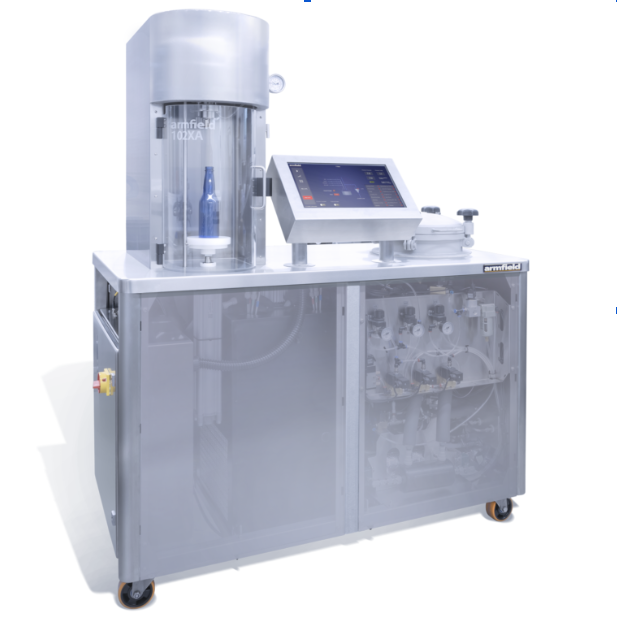
Developing a successful food or beverage product requires far more than creating the right formulation. Manufacturers, universities and research organisations need to understand how ingredients behave during mixing, heating, cooling, homogenisation, filtration, drying and other processing stages before committing to full-scale production.…
Developing a successful food or beverage product requires far more than creating the right formulation. Manufacturers, universities and research organisations need to understand how ingredients behave during mixing, heating, cooling, homogenisation, filtration, drying and other processing stages before committing to full-scale production.
At Armfield, we provide industrial food technology apparatus designed to help bridge the important gap between laboratory experimentation and commercial food manufacturing.
Industrial food technology apparatus from Armfield provides food manufacturers, universities and research organisations with the advanced equipment needed to develop, test and optimise food products with confidence. Designed for pilot-scale processing, laboratory research and teaching applications, Armfield industrial food technology apparatus enables precise process control, repeatable testing and reliable data collection before full-scale production begins.
From dairy and beverages to confectionery, liquid foods, ingredients and emerging protein-based products, our systems allow researchers and product developers to investigate processing conditions at a practical scale while using considerably smaller quantities of product than would typically be required on a production line.
Why Industrial Food Technology Apparatus Matters
Moving directly from a laboratory formulation to industrial production can introduce significant technical and commercial risk.
A product that performs successfully in a small beaker may behave very differently when subjected to industrial heating, pumping, mixing, filtration or cooling conditions. Changes in temperature, pressure, flow rate, shear, holding time and processing sequence can influence characteristics such as texture, stability, flavour, appearance and overall product quality.
This is where industrial food technology apparatus becomes particularly valuable.
Pilot and miniature-scale processing equipment enables development teams to investigate these variables under controlled conditions before deciding how a process should be scaled.
At Armfield, our Industrial Division develops research and development systems primarily for food, beverage, dairy, edible oil and pharmaceutical applications. Our systems are designed to allow industrial manufacturing processes to be replicated at miniature scale within research and laboratory environments.
This approach can help organisations:
- investigate different formulations and processing conditions;
- collect meaningful process data;
- compare alternative production methods;
- optimise important operating parameters;
- evaluate new ingredients;
- minimise unnecessary use of valuable raw materials;
- identify potential processing difficulties earlier;
- support process scale-up decisions; and
- train students, researchers and technical personnel using practical processing equipment.
Rather than relying purely on theoretical predictions, researchers can observe what actually happens to the product when processing variables are changed.
Greater Control During Food Product Development
Process control is fundamental to meaningful research.
When conducting trials, researchers need to know whether changes in the final product resulted from the formulation itself or from variations in processing conditions. Equipment that allows important variables to be monitored and controlled makes it considerably easier to conduct repeatable experiments.
Armfield’s range includes systems offering instrumentation, process control and data-logging capabilities appropriate to different applications.
For example, the Armfield FT174 modular miniature-scale HTST/UHT processing system provides interchangeable options for direct and indirect heating, aseptic processing, homogenisation and chilling. Its modular design allows different processing configurations to be investigated according to the requirements of a particular application.
For organisations evaluating thermal processing conditions, this level of flexibility is especially useful because developers can investigate how changes to the process affect the finished product before moving towards commercial production.
Industrial Food Technology Apparatus for Dairy Applications
Dairy processing involves numerous operations in which accurate control can be critical.
Milk, yoghurt, cream, cheese, ice cream and other dairy products can require combinations of heat treatment, homogenisation, filtration, evaporation, cooling and mixing.
Armfield therefore provides a broad selection of industrial food technology apparatus for dairy research and product development.
Our current dairy equipment range includes miniature and pilot-scale HTST/UHT processing systems, mixing vessels, homogenisation equipment, sterile filling equipment, spray drying, process chilling, laboratory pasteurisation, fluidised-bed drying, evaporation, cheese-making equipment and cross-flow filtration systems.
This enables researchers to investigate individual unit operations as well as develop a better understanding of how different stages of a process interact.
Supporting Beverage and Liquid Food Development
Beverage development presents its own processing challenges.
Fruit-based drinks, plant-based beverages, protein drinks, nutritional products, sauces and other liquid foods may require careful optimisation of heating, homogenisation, filtration and cooling.
The FT174, for example, lists applications including beverages, milk, cream, yoghurt, fruit and vegetable purées, fruit juices, sauces, soups, protein drinks and plant-based beverages.
This illustrates one of the principal advantages of flexible Armfield industrial food technology apparatus: a single research environment can often be configured to investigate several related applications and process conditions.
For research teams developing multiple products, this flexibility can provide greater value than equipment designed around only one rigid experiment.
Filtration and Separation Research
Separation technologies are another important part of modern food processing.
Cross-flow filtration can be used in applications including milk protein standardisation, whey processing, fruit juice clarification and beverage processing.
Armfield’s FT18-MKII Modular Cross Flow Filtration system is a pilot-scale platform capable of operating with different membrane configurations. Parameters including retentate flow, pressure and permeate characteristics can be investigated, while process parameters can be data logged for subsequent analysis.
The ability to generate useful experimental data with relatively small quantities of material is particularly valuable during early product and process development.
From Confectionery to Frozen Products
Industrial food technology apparatus is not limited to liquid processing.
Texture, crystallisation and temperature history can be extremely important in products such as confectionery, fats, spreads and ice cream.
Armfield’s scraped-surface heat exchanger technology, for example, can be used in applications involving fat crystallisation and ice cream freezing. Processing variables such as temperature, flow, system pressure and scraper operation can be controlled to investigate their effects on the product.
This provides development teams with a practical way to explore relationships between processing conditions and product characteristics without immediately undertaking production-scale trials.
Valuable Equipment for Universities and Research Organisations
The benefits of industrial food technology apparatus extend beyond commercial manufacturers.
Universities need equipment that allows students to connect theoretical food engineering concepts with actual processing behaviour. Research institutions need flexible systems capable of supporting controlled investigations, while companies often require platforms that their product development teams can use for formulation and scale-up work.
Armfield equipment supports educational teaching, vocational training, research and development, pilot-scale work and small-scale batch processing across multiple application areas.
For students, this provides practical exposure to processes they may later encounter in industry.
For academic researchers, the ability to control processing variables and collect data supports more rigorous experimental work.
For manufacturers, the same principles can help answer practical questions before valuable production capacity and raw materials are committed to large-scale trials.
Reducing the Risk of Scaling Up
One of the most important stages of product development is determining whether laboratory results can translate successfully into production.
Scaling a process is rarely as simple as multiplying ingredient quantities.
Heat transfer characteristics can change. Pumping behaviour can change. Mixing conditions can change. Holding times and flow characteristics can change. A formulation that appears stable under laboratory conditions may therefore require further optimisation when exposed to processing conditions that more closely resemble industrial manufacturing.
Pilot-scale industrial food technology apparatus gives development teams an intermediate environment in which these questions can be explored.
It is not a substitute for final production validation. Instead, it provides valuable evidence that can help engineers and product developers make better-informed decisions before that stage is reached.
That distinction is important. Good product development is about reducing uncertainty systematically rather than assuming that laboratory success automatically guarantees industrial performance.
Reliable Data for Better Development Decisions
Modern food development increasingly depends on evidence.
Development teams need to understand not simply whether a trial worked, but why it worked.
Depending on the Armfield system and configuration selected, parameters can be measured, controlled, recorded and subsequently analysed. This makes it possible to compare trials more systematically and identify operating conditions that deserve further investigation.
For example, Armfield’s systems include data-logging capabilities across several research and development applications, while equipment such as the FT174 provides controlled processing and configurable operating parameters.
Repeatable testing is particularly important when examining formulation changes. If the processing conditions remain controlled, researchers can have greater confidence that observed differences are genuinely connected to the variables being investigated.
A Flexible Solution for Different Food Technology Requirements
There is no single piece of equipment that can realistically represent every food manufacturing process.
That is why our approach at Armfield focuses on providing a comprehensive range of industrial food technology apparatus covering a wide selection of unit operations and applications.
Depending on the research or production-development objective, solutions can support areas including:
- HTST and UHT processing;
- pasteurisation;
- homogenisation;
- mixing;
- cross-flow membrane filtration;
- evaporation;
- spray drying;
- fluidised-bed drying;
- crystallisation;
- cooling and chilling;
- cheese-making;
- sterile filling; and
- associated pilot-scale processing operations.
Armfield can also provide processing-line advice, planning, installation, commissioning and training alongside equipment solutions, allowing customers to discuss the complete requirement rather than considering individual machines in isolation.
Why Choose Armfield Industrial Food Technology Apparatus?
When organisations invest in food technology research equipment, the requirement is rarely simply to purchase another machine.
The real objective may be developing a new product, improving an existing process, reducing development uncertainty, teaching the next generation of food technologists or generating reliable research data.
That is why we focus on the application as well as the equipment.
Our industrial food technology apparatus is designed to provide practical platforms through which food manufacturers, universities and research organisations can investigate real processing challenges at a manageable scale.
From initial experimentation through pilot-scale development, the objective is to give users greater visibility and control over what happens to their product during processing.
Ultimately, better information during development can support better decisions when the time comes to scale.
Develop Your Next Food Technology Project with Armfield
Whether you are developing a new dairy product, investigating beverage processing, evaluating filtration technology, researching thermal treatment, working on confectionery or exploring the next generation of food products, Armfield can help you identify industrial food technology apparatus suited to your application.
Every development programme presents different challenges, so the best equipment configuration depends on your product, process, required operating conditions, research objectives and scale.
Speak to the Armfield team about your application today. Tell us what you are developing, the process you need to investigate and the parameters that matter to your project, and we can help you explore an appropriate solution.
Contact Armfield to discuss your industrial food technology apparatus requirements, request further product information or obtain a quotation: Contact the Armfield team
Always confirm deadlines, eligibility rules, fees and admission requirements with the relevant official institution or examination authority.
Continue learning
Related resources

Creating Safer Roadways Starts With Better Drivers
Why Driver Education Matters Safer roads don’t happen by accident. They’re built through good habits, awareness, patience, and drivers who understand that being behind the wheel is a…

What’s Actually Changed on the Ground
The pandemic forced adoption faster than any policy could have. Suddenly, apps that were previously “nice to have” became the only way school continued. Post-pandemic, a lot of…

How the Curriculum Structure Differs
The education system in India leans heavily on syllabus completion and exam performance. Boards like CBSE, ICSE, and state boards are largely content-driven — you learn a fixed…