
Higher Education guide
Higher Education Trends in India to Watch in 2026
Higher education in India isn’t the same beast it was even five years ago. Between policy shifts, tech disruption, and changing job market demands, the higher education trends India is seeing right now genuinely…

Higher education in India isn’t the same beast it was even five years ago. Between policy shifts, tech disruption, and changing job market demands, the higher education trends India is seeing right now genuinely affect what course and college choices actually make…
Higher education in India isn’t the same beast it was even five years ago. Between policy shifts, tech disruption, and changing job market demands, the higher education trends India is seeing right now genuinely affect what course and college choices actually make sense today. Let’s look at what’s real, not just buzzworthy.
Multidisciplinary Learning Is Finally Taking Hold
Under NEP 2020’s push, universities are slowly moving away from rigid single-discipline degrees toward more flexible, multidisciplinary programs.
Quick answer: Multidisciplinary education under NEP 2020 allows students to combine subjects across science, arts, and commerce within a single degree — for example, a computer science student can now take a psychology or economics elective as part of their core credits at several universities.
I’ve noticed this shift is most visible at central universities and IITs so far, with private and state universities catching up more slowly due to faculty and infrastructure constraints.
Rise of Skill-Integrated Degrees
Traditional degrees paired with practical, job-ready skill components are becoming far more common than before.
- Universities increasingly partnering with industry for embedded internships within the degree structure
- Coding, data analysis, and communication skills modules being added to non-tech degrees too
- Apprenticeship-embedded degree programs gaining traction, especially in engineering and management
Growth of Online and Hybrid Degree Programs
Quick answer: UGC-approved online degrees from recognised universities are now considered equivalent to regular degrees for most employment and further study purposes, opening access for students who can’t relocate or afford full-time on-campus programs.
- IGNOU, along with several IITs and top universities, now offer UGC-recognised online degrees
- Hybrid models combining occasional campus visits with primarily online coursework are expanding
- This trend particularly benefits working professionals pursuing further education alongside jobs
Increased Focus on Research and Innovation
Picture a decade ago, when most Indian undergraduate students had almost no exposure to actual research work until a possible postgraduate program. That’s shifting now, with more institutes actively encouraging undergraduate research projects and innovation cells.
- Government funding for research infrastructure has increased notably in recent years
- Startup incubation centres are now common at most major technical universities
- Patent filing and research paper publication increasingly encouraged even at the undergraduate level
Internationalisation of Indian Campuses
Foreign university campuses setting up in India, and Indian universities forming international partnerships, is a genuinely new development worth watching.
- Select foreign universities have begun establishing India campuses following recent policy changes
- Dual-degree and exchange programs between Indian and international universities are expanding
- This could reduce the need for some students to go abroad entirely for a globally recognised degree
Emphasis on Employability Over Pure Academics
Employers have been vocal for years about the gap between what degrees teach and what jobs actually require. Universities are finally responding more seriously.
- Soft skills and communication training increasingly built into core curriculum, not just optional add-ons
- Industry advisory boards now shaping curriculum design at several top institutes
- Placement cells expanding beyond just campus interviews to include structured career counselling
[link to related guide about cost of higher education in india vs abroad here]
What This Means for Students Choosing a Path Today
Quick answer: Students choosing higher education paths in 2026 should prioritise institutions actively embracing multidisciplinary learning, industry partnerships, and flexible online/hybrid options, since these factors increasingly determine both learning quality and employability outcomes.
[link to related guide about how to choose university here]
FAQ
What is the biggest change in Indian higher education right now? The shift toward multidisciplinary, flexible degree structures under NEP 2020, alongside growing acceptance of UGC-recognised online degrees, stands out as the most significant ongoing change.
Are online degrees from Indian universities valid for jobs? Yes, UGC-approved online degrees from recognised universities are generally considered equivalent to regular degrees for most employment and further education purposes.
Is undergraduate research becoming more common in India? Yes, more institutes are actively encouraging undergraduate research and innovation, supported by increased government funding for research infrastructure.
Will foreign university campuses in India reduce the need to study abroad? Potentially, for students seeking a globally recognised degree without relocating, though established study-abroad advantages like international work exposure remain distinct.
How is employability being addressed in Indian higher education? Universities are increasingly integrating soft skills training, industry advisory input, and structured career counselling directly into curriculum design rather than treating it as separate from academics.
Conclusion
The higher education trends India is currently experiencing reflect a genuine, if uneven, shift toward flexibility, employability, and global integration. When choosing your own path, look beyond just brand reputation and check how actively an institution is embracing these changes — that’s increasingly a better predictor of your learning experience and career outcomes than rankings alone.
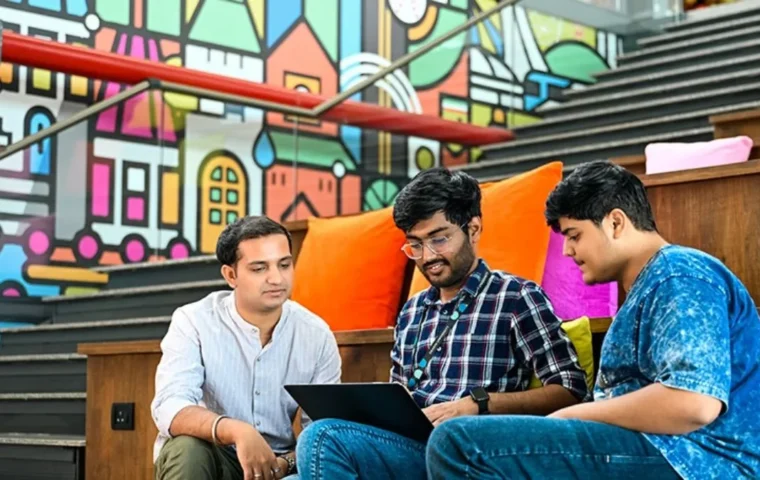
Suggested image alt text: Indian university students collaborating on a research project in a lab setting
Always confirm deadlines, eligibility rules, fees and admission requirements with the relevant official institution or examination authority.
Continue learning
Related resources
Cost of Higher Education in India vs Abroad: The Real Numbers
Every family planning higher education eventually sits down to do the math, and the numbers can be genuinely shocking if you haven’t looked closely before. Understanding the real…